

A Designer Sees What a Room Could Be
What does an interior designer see that others might miss? Inside our Vista Verde project, we discovered hidden square footage, transformed an awkward corner and made strategic decisions about what was—and wasn't—worth changing.
Three ways we uncovered hidden potential in our Vista Verde project
One of the most valuable things an interior designer brings to a project isn’t something you can order from a showroom. It’s the ability to walk into a home and see possibilities that aren’t immediately obvious.
Sometimes that means recognizing that something doesn’t quite add up. Sometimes it means knowing when not to renovate. And sometimes it’s simply looking at an awkward, unused corner and realizing it could become one of the most interesting moments in the room.
Our Vista Verde project here in Austin is a great example of how we approach a home as interior designers. Rather than starting with a list of everything we wanted to change, we looked carefully at what was already there—and asked what it could become.
Finding Space Hidden Behind a Wall
One of my favorite discoveries happened in the living room.
There was a substantial wall next to the fireplace, with the powder room located directly behind it. Based on the size of that wall, I expected the powder room to be fairly large.
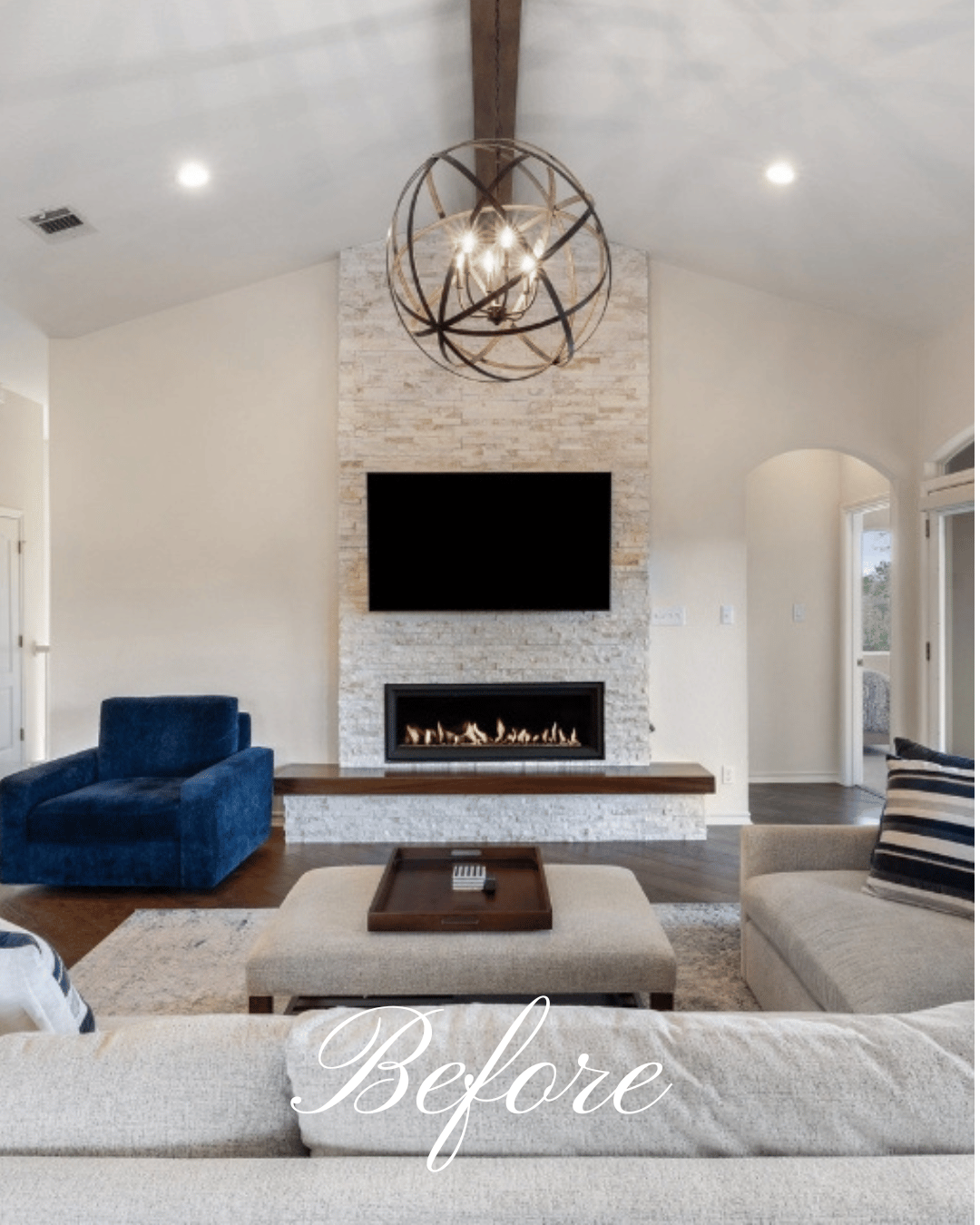
But when I walked into the powder room, it was a completely typical size.
Something didn’t add up.
I suspected there might be unused space between the two rooms, so I asked the contractor to cut a small exploratory opening in the drywall so we could take a look.
Sure enough, there it was: dead space hiding inside the wall.
Rather than simply opening it up, we thought about what that newly discovered space could do for the living room.
On the opposite side of the fireplace was an existing opening leading toward the primary bedroom. We mirrored its width and proportions on the other side, creating a sense of symmetry around the fireplace. Within the new opening, we added floating shelves that could be styled with books, artwork and collected objects.
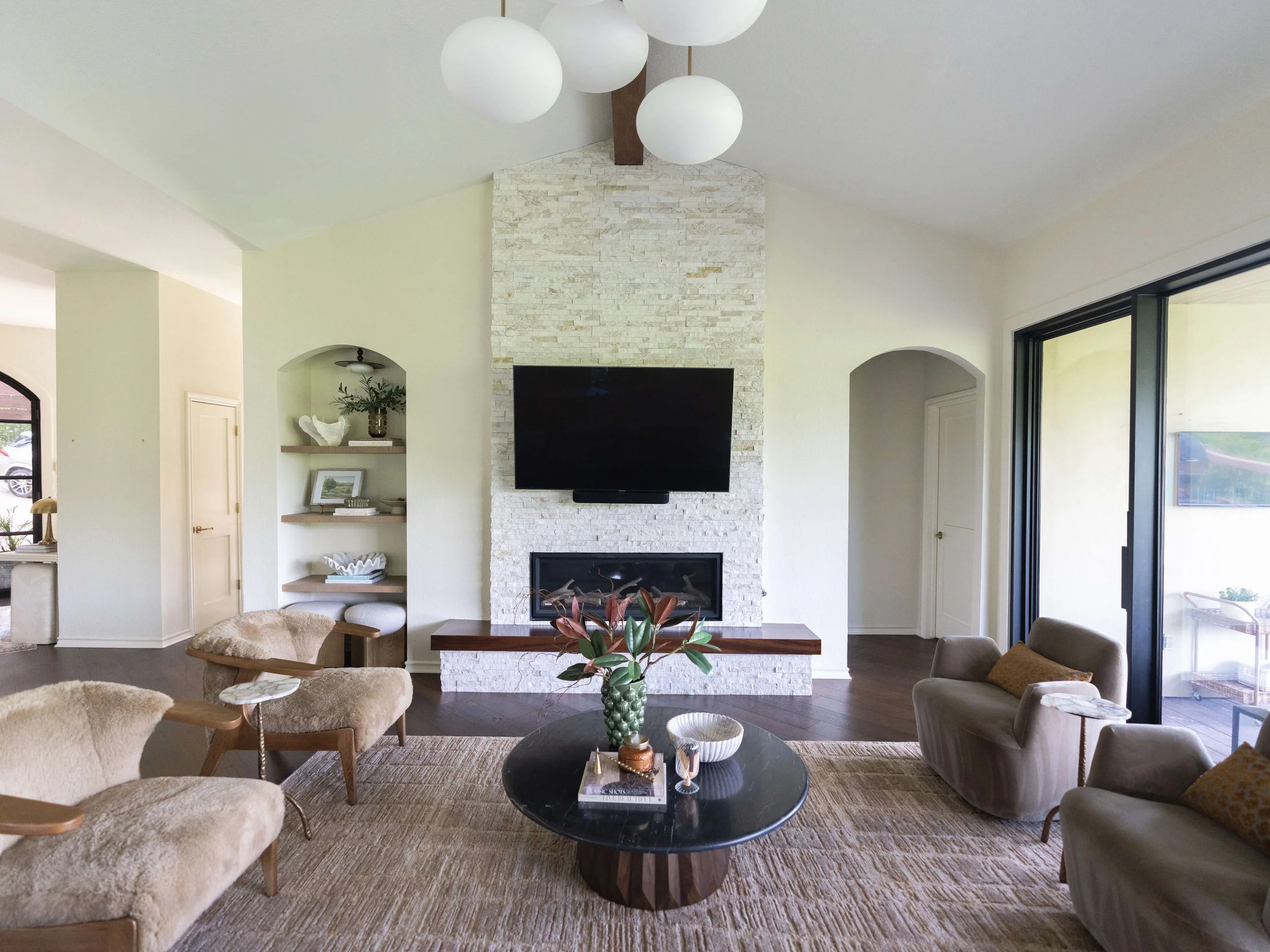
Photography: Paige Vaughn
What had been completely wasted square footage became an architectural feature—and the entire fireplace wall suddenly felt more intentional.
Sometimes good space planning isn't about adding square footage. It's about recognizing the square footage you already have.
Knowing When Not to Renovate
Designers are often hired to change things, but part of our job is also knowing what deserves to stay.
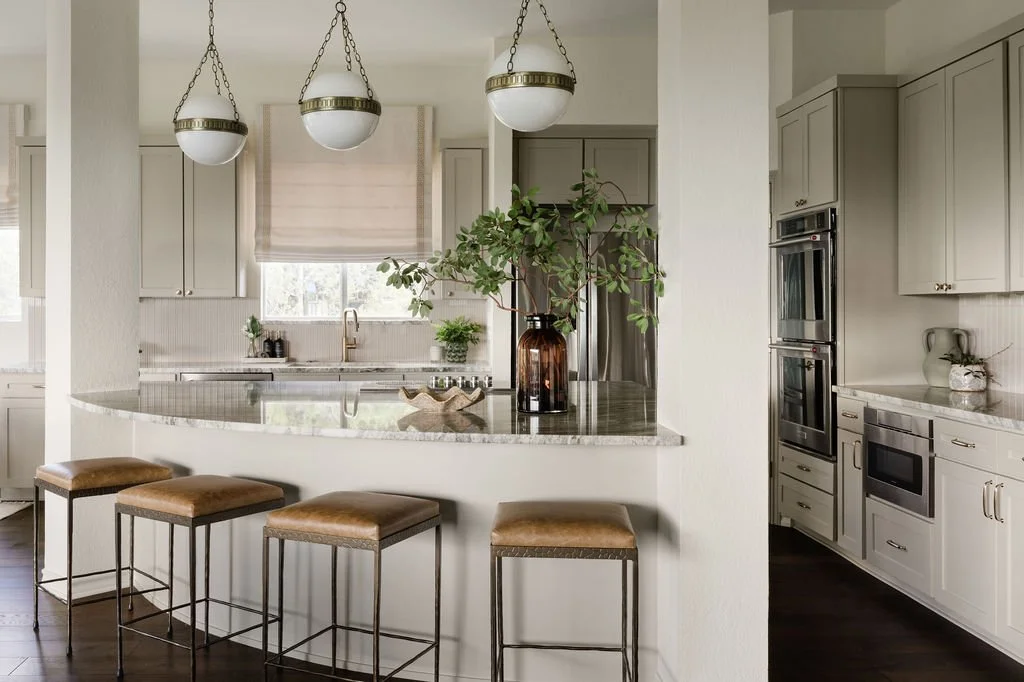
The Vista Verde kitchen was relatively new and functioning well. A full gut renovation simply wasn't necessary.
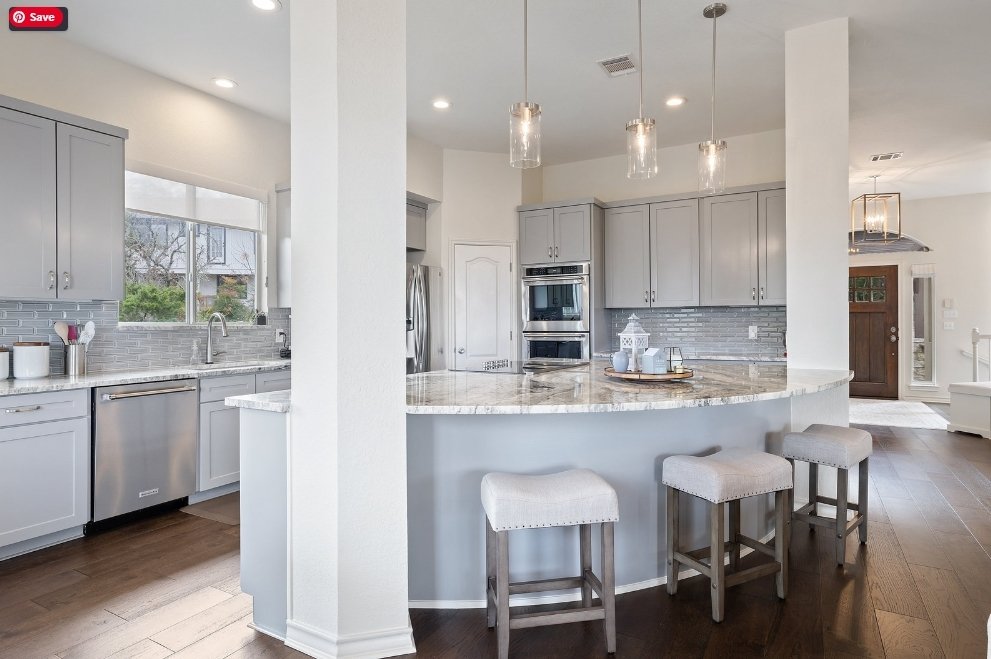
Before Image of Vista Verde Kitchen
Could we have torn it out and started again? Of course. But that wouldn't necessarily have been the smartest use of the client's investment.
Instead, we looked at what was working, what could be improved and where changes would make the greatest impact.
That kind of restraint is an important part of the design process. Renovation shouldn't be about replacing everything simply because we can. It should be about making informed decisions that improve the way the entire home looks, feels and functions.
There are certainly homes where the right answer is a complete renovation. There are others where the bones are good and a more selective approach makes sense.
Good design is knowing the difference.
Giving an Awkward Corner a Reason to Exist
Then there was the lonely corner of the living room.
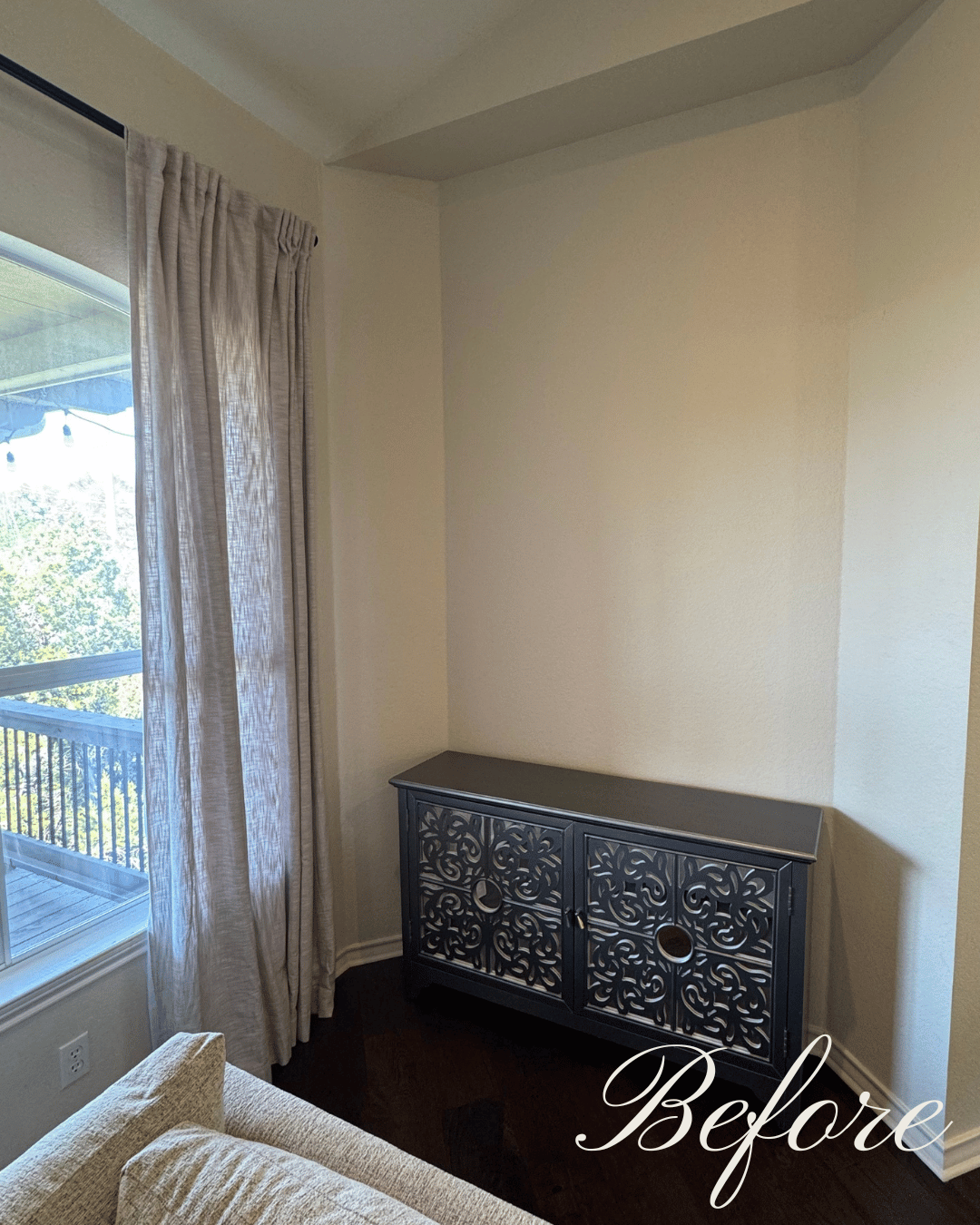
It wasn't quite large enough to become another seating area, and it didn't need another piece of furniture simply filling the space. It was one of those slightly awkward architectural moments that could easily have remained an afterthought.
Instead, we gave it a job.
We transformed the niche into a small bar with a beautifully shaped cabinet, suspended brass shelving, wallpaper and a pendant overhead. What had once been an empty pass-through corner became a destination within the room.
And because it sits just off the main living area, its new purpose makes sense for the way the family entertains.

Photography: Madeline Harper
This is one of my favorite kinds of transformation because it doesn't require adding more space. It requires seeing existing space differently.
Look at Your Home Before You Decide What It Needs
It's easy to begin a renovation or furnishing project by making a list of things you want to replace.
But before deciding what a home needs, I prefer to spend some time understanding what it's already trying to tell us.
Where do the proportions feel strange? Where is square footage being wasted? Which elements are worth preserving? Which spaces don't have a clear purpose? And where might there be an opportunity hiding in plain sight—or, occasionally, behind a wall?
Those questions often lead to much more interesting solutions than simply starting over.
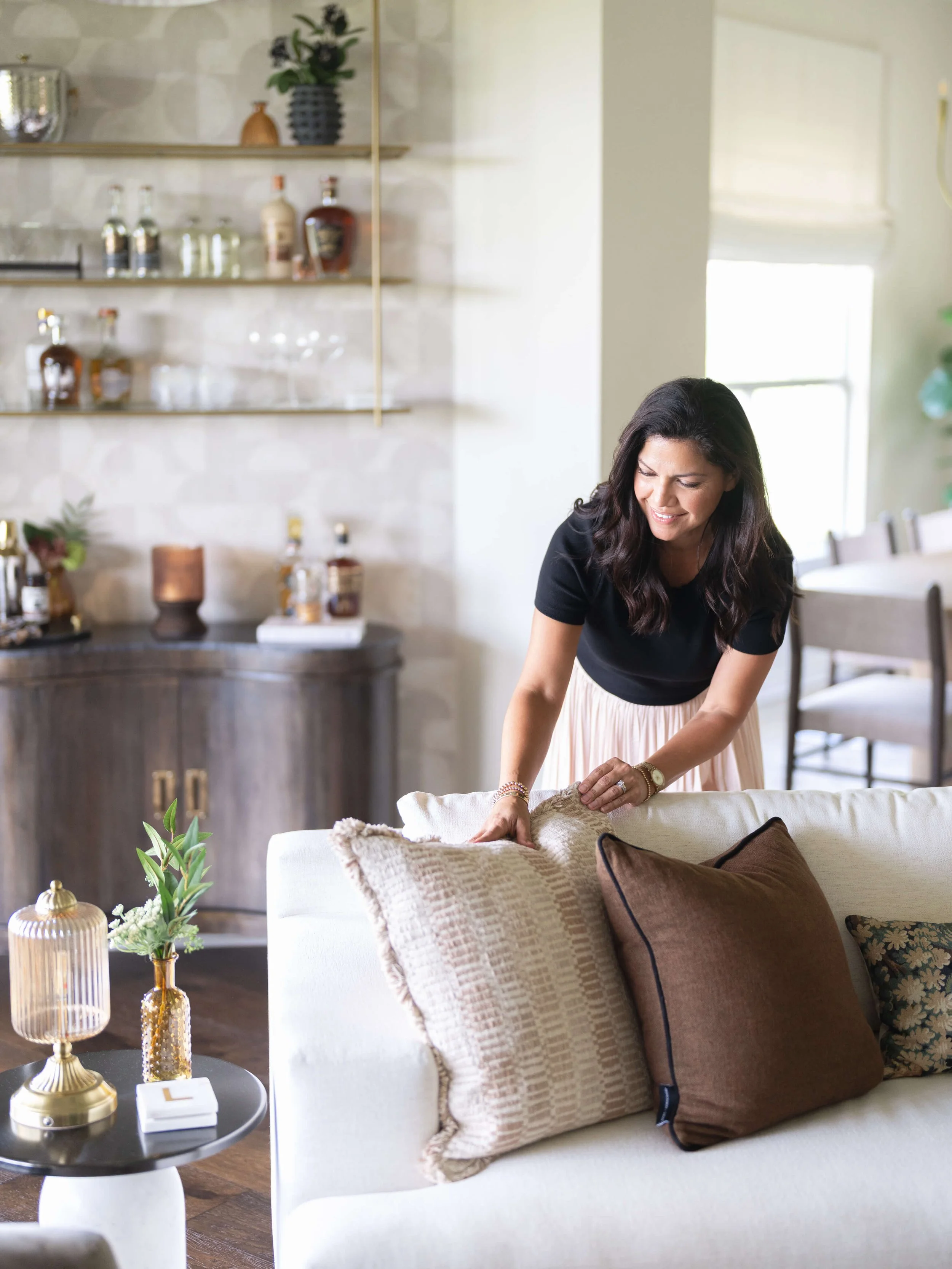
Because a designer's job isn't just to make a home more beautiful.
It's to see what the home could become.
Photography: Madeline Harper
Wondering what possibilities you might be overlooking in your own home?
Whether you're planning a renovation, furnishing a new home or trying to make your existing spaces work better, we can help you see the opportunities—and determine which changes will make the greatest difference.
Explore our interior design services →

Stop Making Your Family Conform to Your House
Your floor plan may call it a dining room, office or breakfast nook—but that doesn't mean you have to use it that way. Inside our French Quarter project, we reimagined underused spaces around the way this Austin family actually lives.
Why the best floor plans aren't always used the way the builder intended
When we move into a home, the floor plan comes with a set of assumptions.
This is the formal dining room.
This is the breakfast nook.
This is the office.
And without really questioning it, we often arrange our lives around those labels.
But what happens when your family doesn't host formal dinners? What if you don't need two eating areas? What if you work from home but hate sitting behind a traditional desk?
One of the first things we try to understand when designing a home isn't simply what each room is called. It's how our clients actually live.
The French Quarter project was a perfect example.
Inspired by our clients' love for their hometown of New Orleans, this Austin home was always going to be colorful, collected and personal. Their wonderful collection of New Orleans artwork helped influence the character of the interiors, but some of our most important design decisions had very little to do with color, furniture or finishes.
They came from reconsidering how the family was using their home.
The Formal Dining Room That Didn't Need to Be a Dining Room
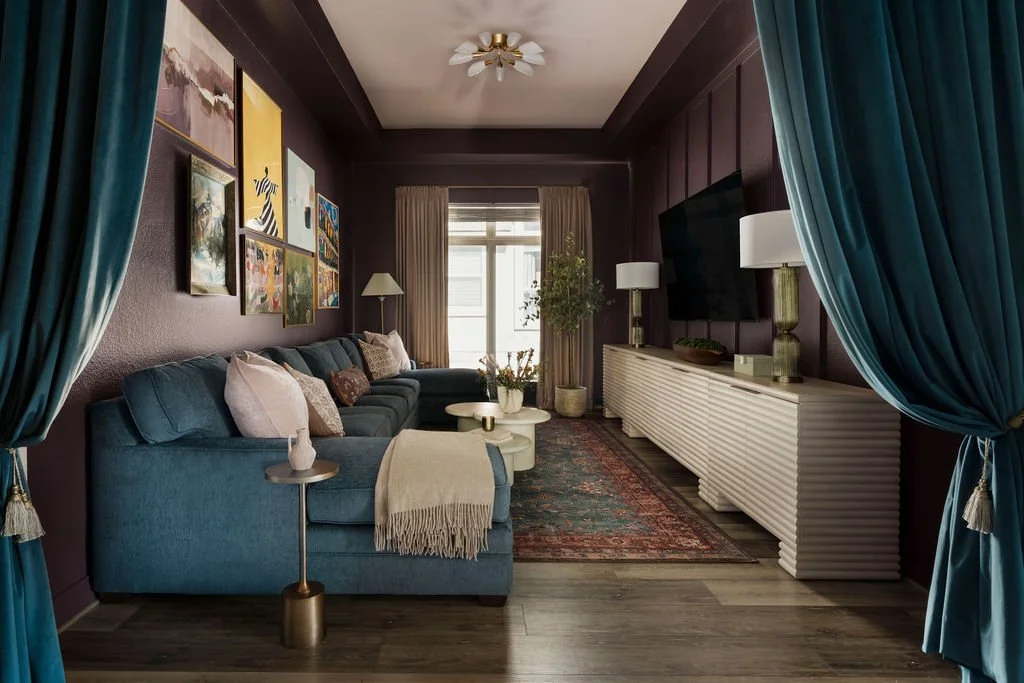
The existing floor plan included a traditional formal dining room.
There was just one problem: our clients didn't need one.
Rather than furnishing a room simply because the floor plan told us it was a dining room, we asked what would actually make that square footage useful to the family.
The answer was a media room.
Photography: Madeline Harper
Instead of creating a beautiful formal dining room that might only be used occasionally, we transformed the space into somewhere the family could gather, relax and enjoy regularly.
This is something we remind clients of all the time: you don't owe your house a formal dining room.
If another use would improve your everyday life, that's worth exploring.
Finding the Right Place for Everyday Dining
Of course, eliminating the formal dining room didn't eliminate the need for a dining table.
The family simply didn't need a large one.
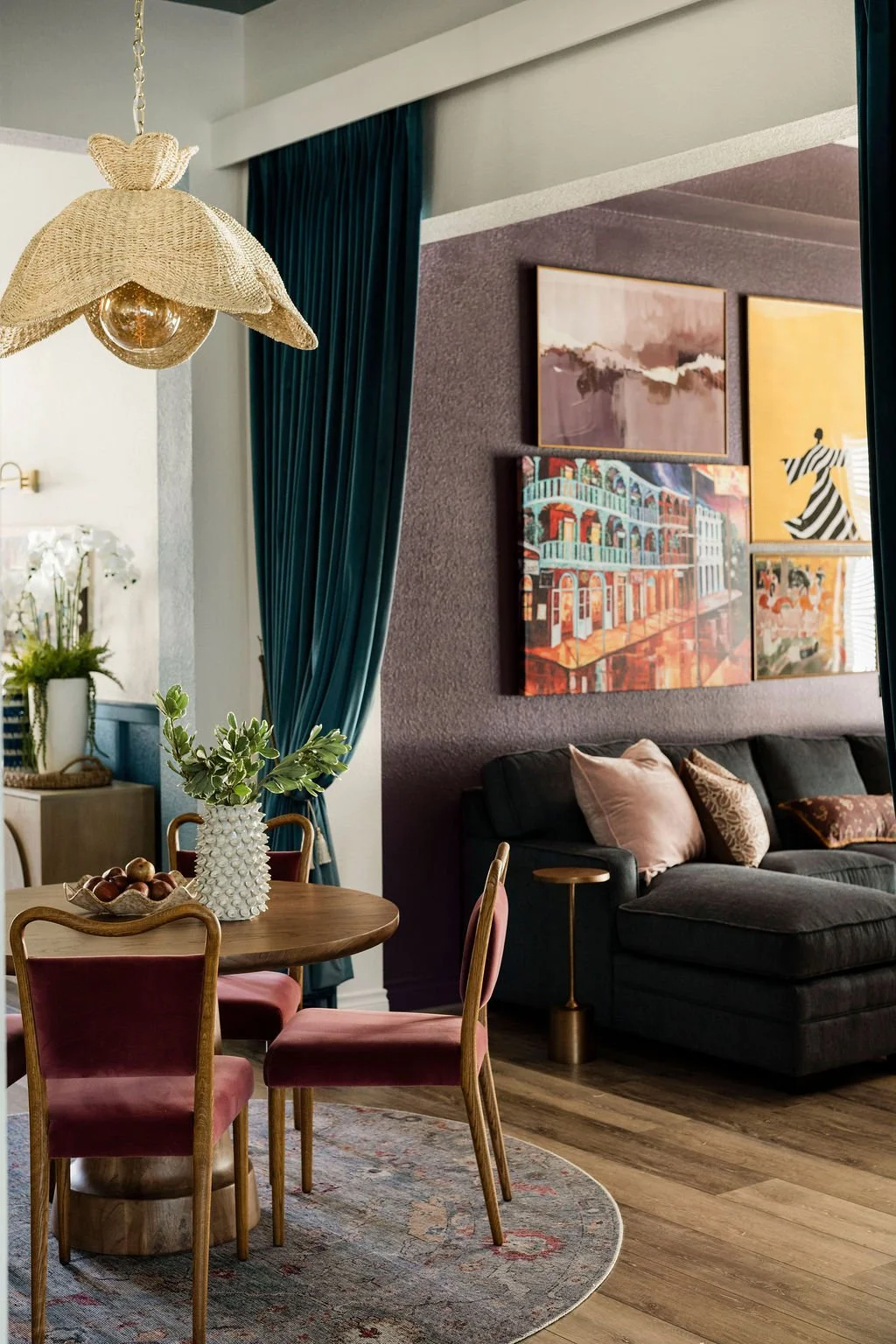
Near the kitchen was an open area that wasn't really serving a purpose. Rather than allowing that square footage to remain a pass-through space, we turned it into a smaller everyday dining area.
Photography: Madeline Harper
Its proximity to the kitchen made sense. Its scale made sense. Most importantly, it reflected how the family actually eats and gathers.
Sometimes thoughtful interior space planning isn't about adding square footage or moving walls. It's about looking at the square footage you already have differently.
A space doesn't have to be large to work beautifully. It just needs to be appropriately sized for the people using it.
Designing the Laundry Room Around the Whole Chore
Laundry rooms are another place where we often see homes designed around the appliances rather than the activity.
A washer and dryer may technically make something a laundry room, but washing clothes is only one part of doing laundry.
There's sorting. Treating stains. Folding. Stacking. Hanging. And inevitably, somewhere to put everything while you're doing it.
When we reworked the laundry room at French Quarter project, we incorporated a dedicated folding area into the layout.
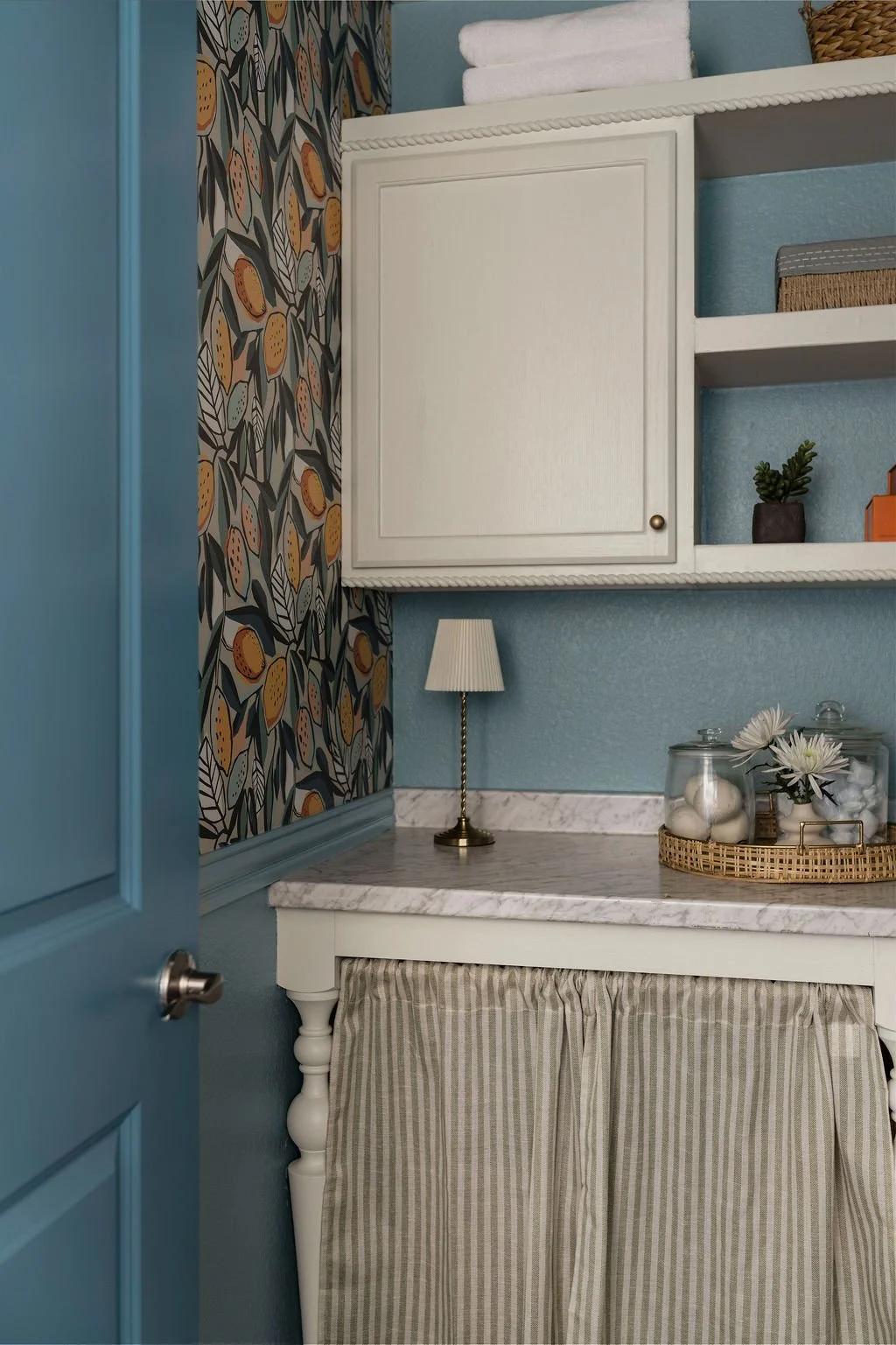
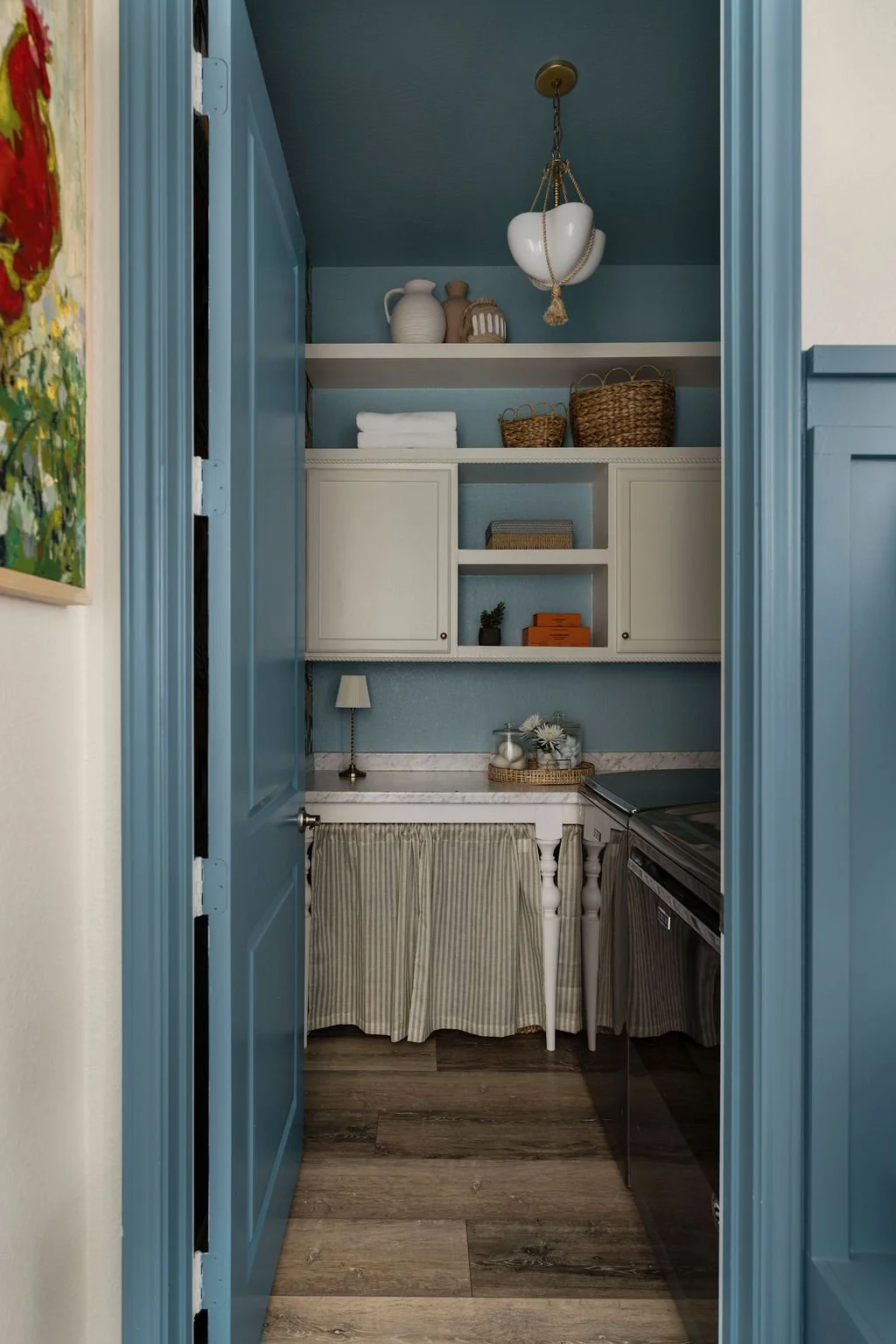
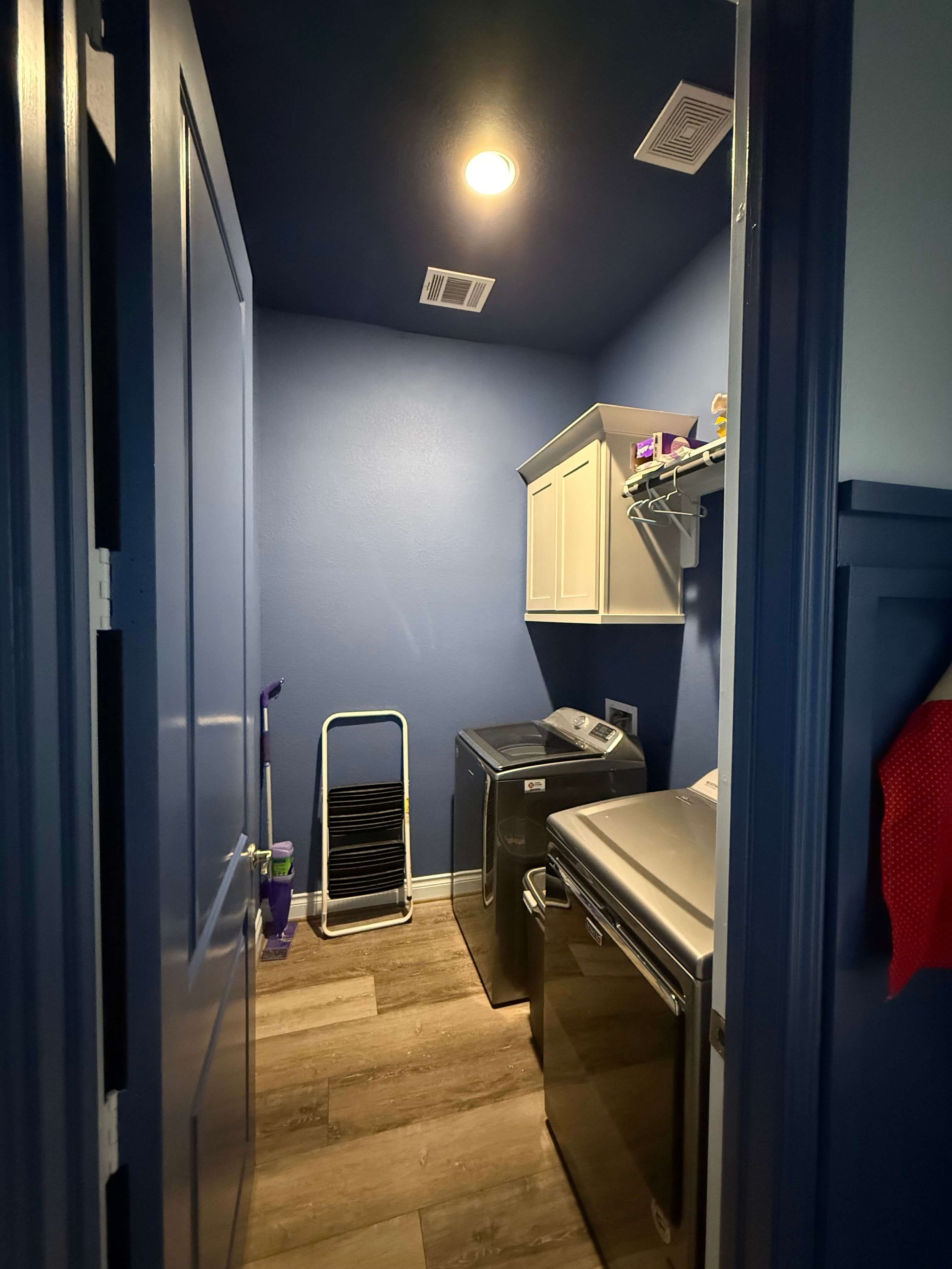
It's a relatively simple decision, but this is the kind of functionality that can make an enormous difference in everyday life.
Instead of carrying clean laundry somewhere else in the house to finish the job, the room supports the process from beginning to end.
And that's an important distinction in residential design: a room can contain everything it's supposed to contain and still not function particularly well.
Good design considers what happens between the pretty pictures.
Who Says a Home Office Needs a Desk?
Perhaps my favorite example from this home is the office.
When we started talking about how our client wanted the room to feel, she told us something important.
Much of her career had been spent traveling around the world. She was accustomed to opening her laptop and working from beautiful hotel lounges, meeting clients in comfortable seating areas rather than sitting behind a conventional desk.
That experience shaped the way she liked to work.
So why would we suddenly put her behind a desk just because she was working from home?
We didn't.
Instead, we approached the room almost as a hospitality space.
A curved sofa, comfortable chairs, a small table, layered lighting and an oversized floral mural created a room that feels much more like a boutique hotel lounge than a traditional home office.
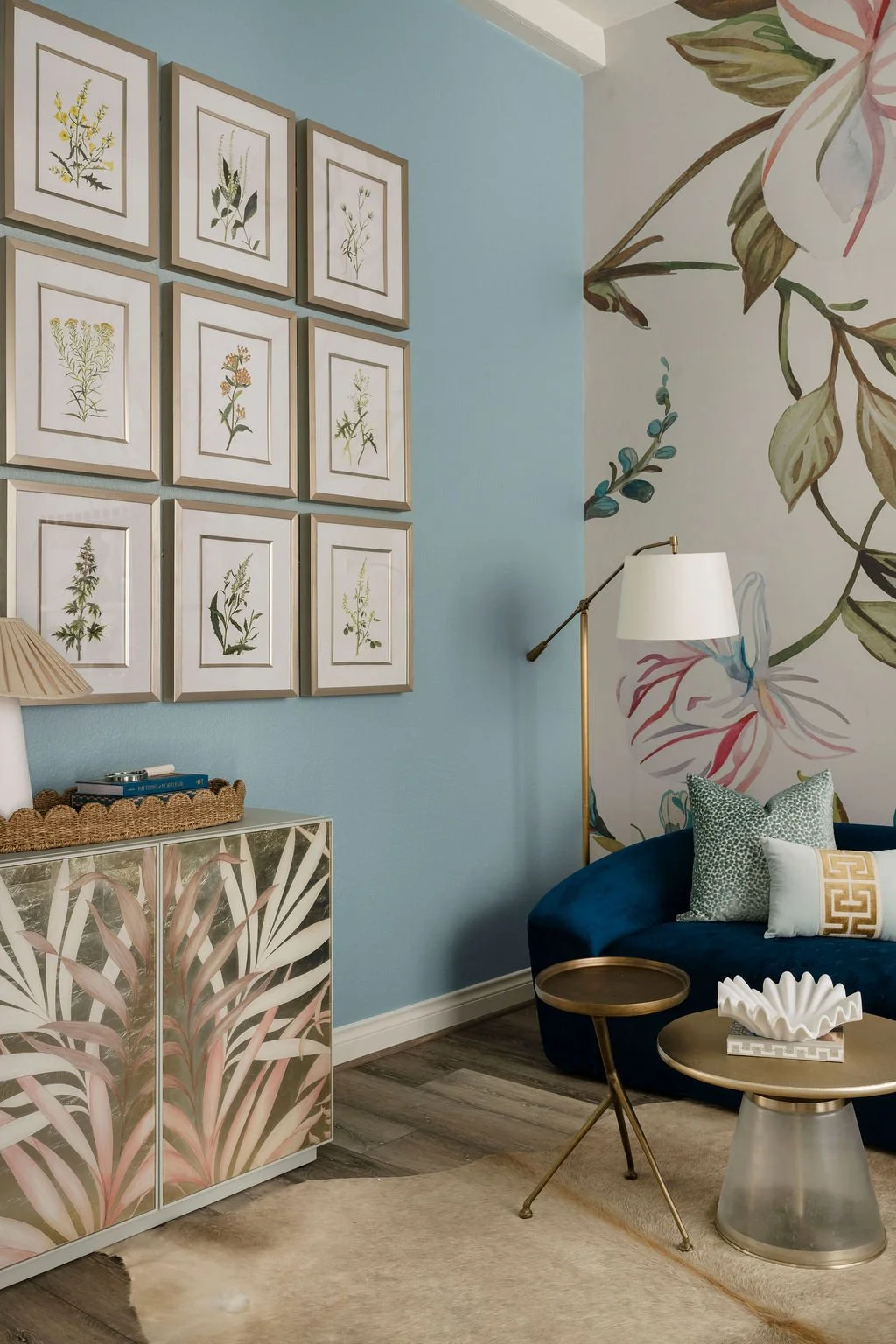
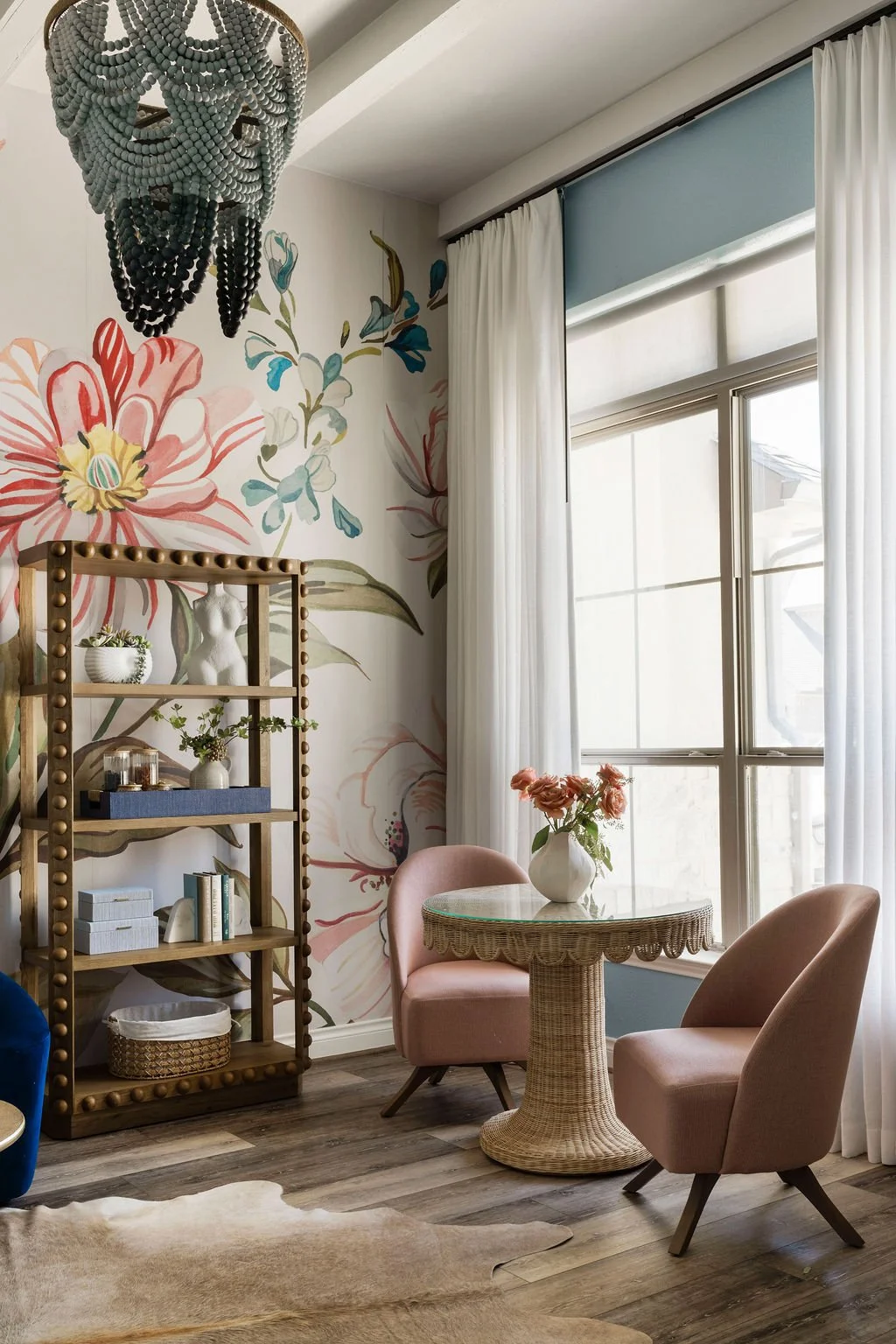
And yet, for our client, it functions as an office because it supports the way she works.
That's the distinction.
We weren't trying to make the room conform to our idea of what an office should look like. We were designing it around her.
The Breakfast Nook Became a Cool Lounge!
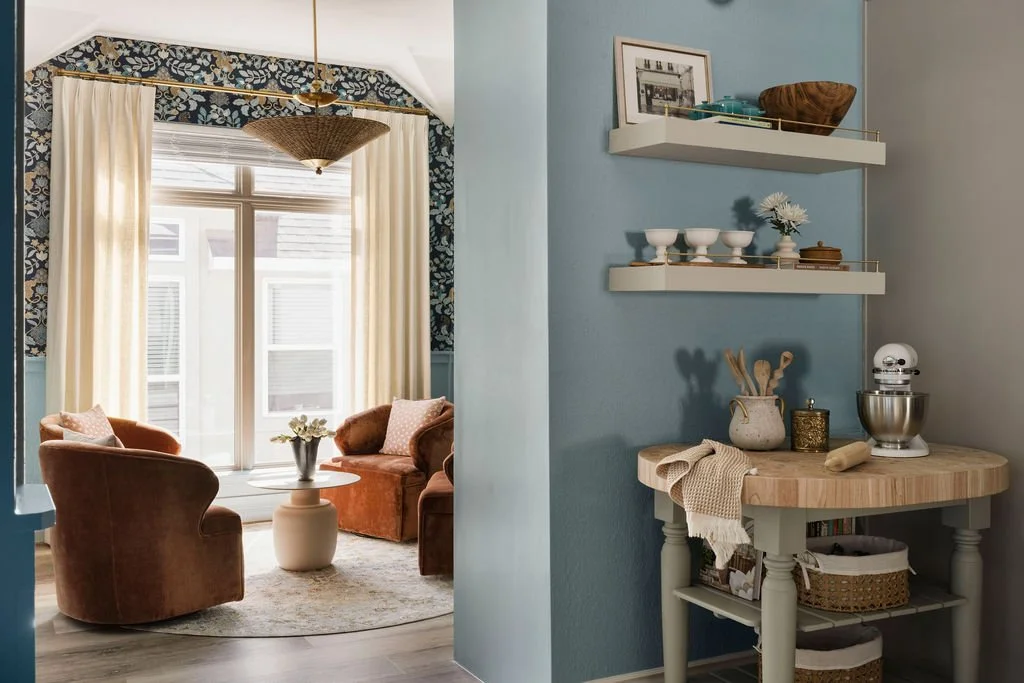
The original breakfast nook was generous in size, but the family didn’t need another dining area so close to the kitchen. Instead, we reimagined it as a comfortable lounge—a place to have a drink, visit with friends, or simply relax and read a book. We added a small wall to separate the nook from the kitchen, which gave us an opportunity to make both spaces work harder. On the lounge side, the new wall became the backdrop for a beautiful dry bar. On the kitchen side, it created space for a dedicated baking station where mother and daughter could bake together on weekends. One simple change to the floor plan gave us two highly functional spaces designed around how this family actually lives. It’s a perfect example of why we don’t automatically accept the label on a floor plan. The better question is always: how would this family actually use this space?
Photography: Madeline Harper
Your Floor Plan Is a Starting Point, Not a Rulebook
There is nothing wrong with having a formal dining room, a traditional home office or a breakfast nook.
If your family uses those spaces, wonderful.
The problem comes when we start designing rooms according to what we're supposed to have rather than what we actually need.
One of my favorite questions to ask when evaluating a home is:
What spaces aren't earning their square footage?
Maybe it's the dining room you walk through every day but use twice a year.
Maybe it's the oversized breakfast area that's become a landing spot for backpacks and laundry.
Maybe it's the guest room waiting for guests who rarely come.
Or maybe it's the home office with a beautiful desk that you never actually sit at.
Those aren't necessarily design problems.
They're opportunities.
Before adding square footage or assuming you need a larger home, sometimes the better question is whether the home you already have is being asked to work in the right way.
At Claudia Pakes Design Studio, our approach to functional interior design and space planning in Austin begins with understanding the people who live in the home—their routines, habits, priorities and even the little things they do without thinking about them. Because ultimately, your home shouldn't dictate how your family lives.
It should make the way you already live feel easier, more beautiful and more intentional.
Is your home asking you to live around rooms you rarely use?
Whether you're remodeling, furnishing a new home or simply trying to make your existing spaces work better, thoughtful space planning can completely change the way a home feels and functions.
Explore our interior design services →

A Home Doesn’t Have to Be Finished All at Once
A return to Poetic Grace transformed a builder-grade primary bath and curved staircase — and proved that sometimes the best homes are designed in chapters.
Returning to Poetic Grace — an Austin, TX primary bathroom remodel, a dramatic staircase transformation, and a reminder that sometimes the best design decisions are the ones given time to evolve.
There is a lot of pressure to think of a home as something that needs to be “finished.” You renovate, furnish, decorate, photograph — done.
But I don’t think the best homes always happen that way.
Sometimes you need to live in a space before you understand what it still needs. Sometimes the budget calls for making thoughtful decisions in phases. And sometimes an idea that initially feels like too much becomes exactly right a year later.
That was very much the story of our return to Poetic Grace, a home we had previously designed for clients who relocated to the Austin area.
The First Chapter
When we first began working with our clients, they were settling into a new-build home. It was bright, beautiful and very white — but it didn’t yet feel like them.
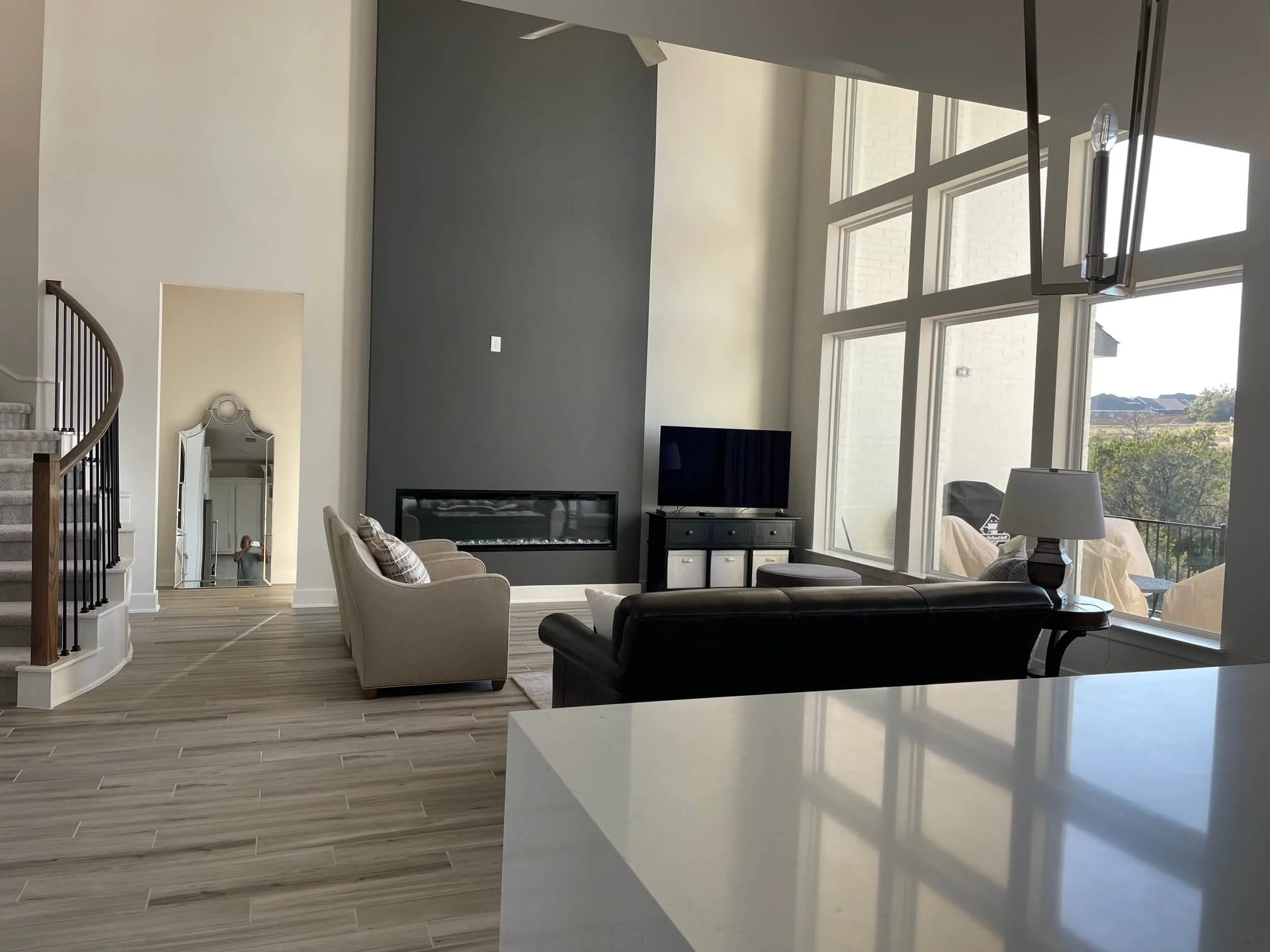
Before image of our Austin TX living room at Poetic Grace project.
They wanted something sophisticated and calm. Nothing overly decorated or fussy. They appreciated a quiet, restrained palette and a sense of order, but they also wanted the house to feel warmer and more personal than the builder-grade finishes they had inherited.
Rather than changing everything, we were strategic.
Warm taupes, millwork, wallpaper, lighting and furnishings began giving the house depth and character. We focused our investment on the places where it would have the greatest impact and allowed other areas to wait. (View the before and after transformation HERE).
And that turned out to be important.
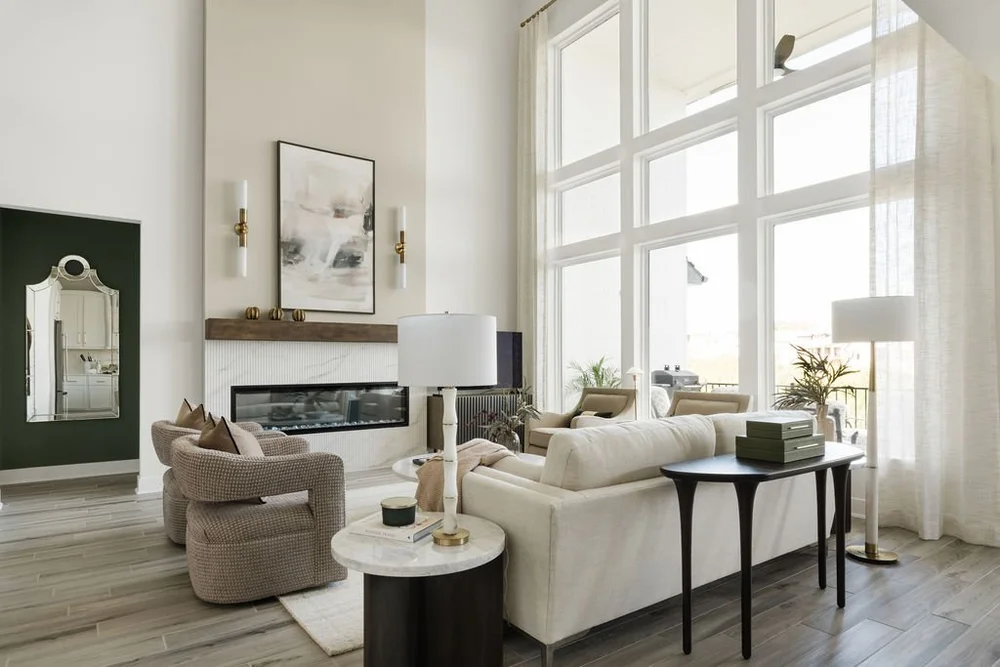
Photography By: Madeline Harper
Reimagining the Primary Bathroom
A little over a year later, our clients invited us back.
This time, the primary bathroom became the major project.
The original bath had many of the same qualities we had encountered elsewhere in the house: white cabinetry, white walls, builder-grade finishes and very little personality. The floors were also slippery — a practical concern that needed to be addressed as part of the renovation.
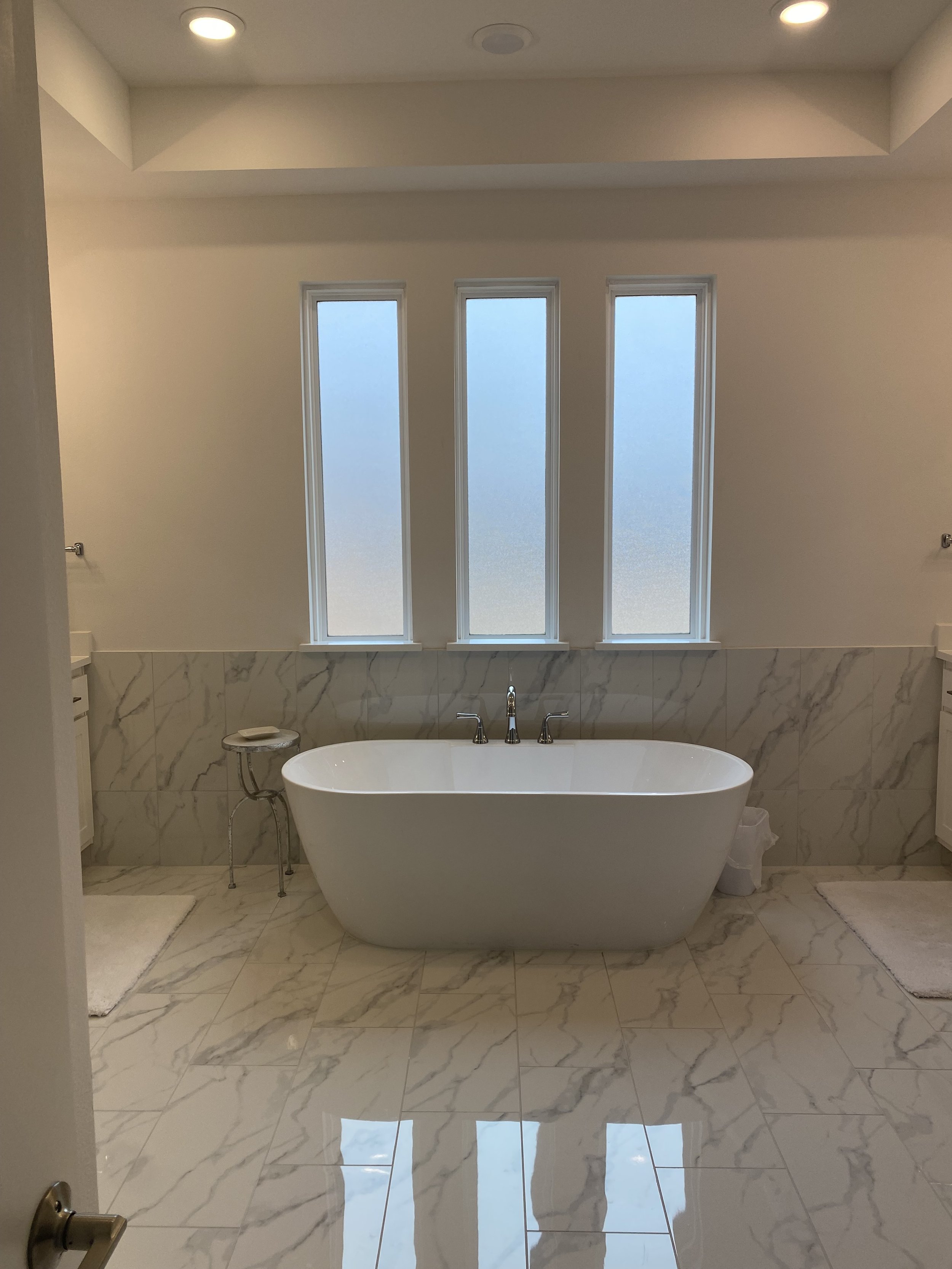
“Before” image of primary bathroom at Poetic Grace.
The goal wasn’t to make the room louder.
It was to make it feel warmer, more elegant and more considered, while still belonging to the serene home we had already created.
We introduced custom cabinetry and millwork, warmer finishes, layered textiles and lighting, and details that gave the room a sense of history without making it feel overly traditional.
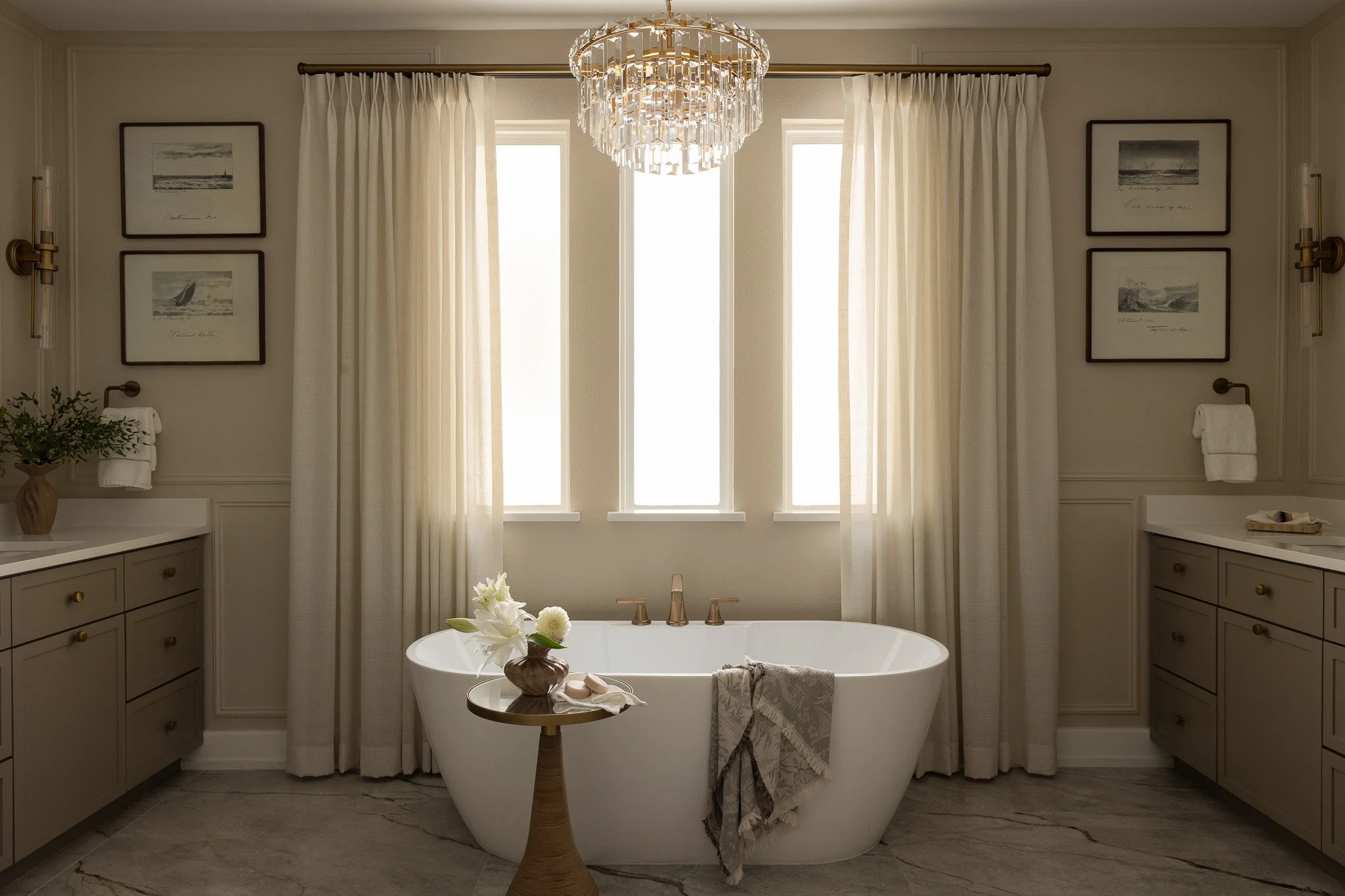
Photography By: Cate Black
One of my favorites is the small vanity stool we designed specifically for our client. Its height and proportions were customized for her, with turned wood legs made using materials sourced from Turkey and a patterned upholstered seat.
It’s not the largest or most expensive element in the room.
But it is exactly the kind of detail I love — something beautiful because it was designed around the person who actually uses it.
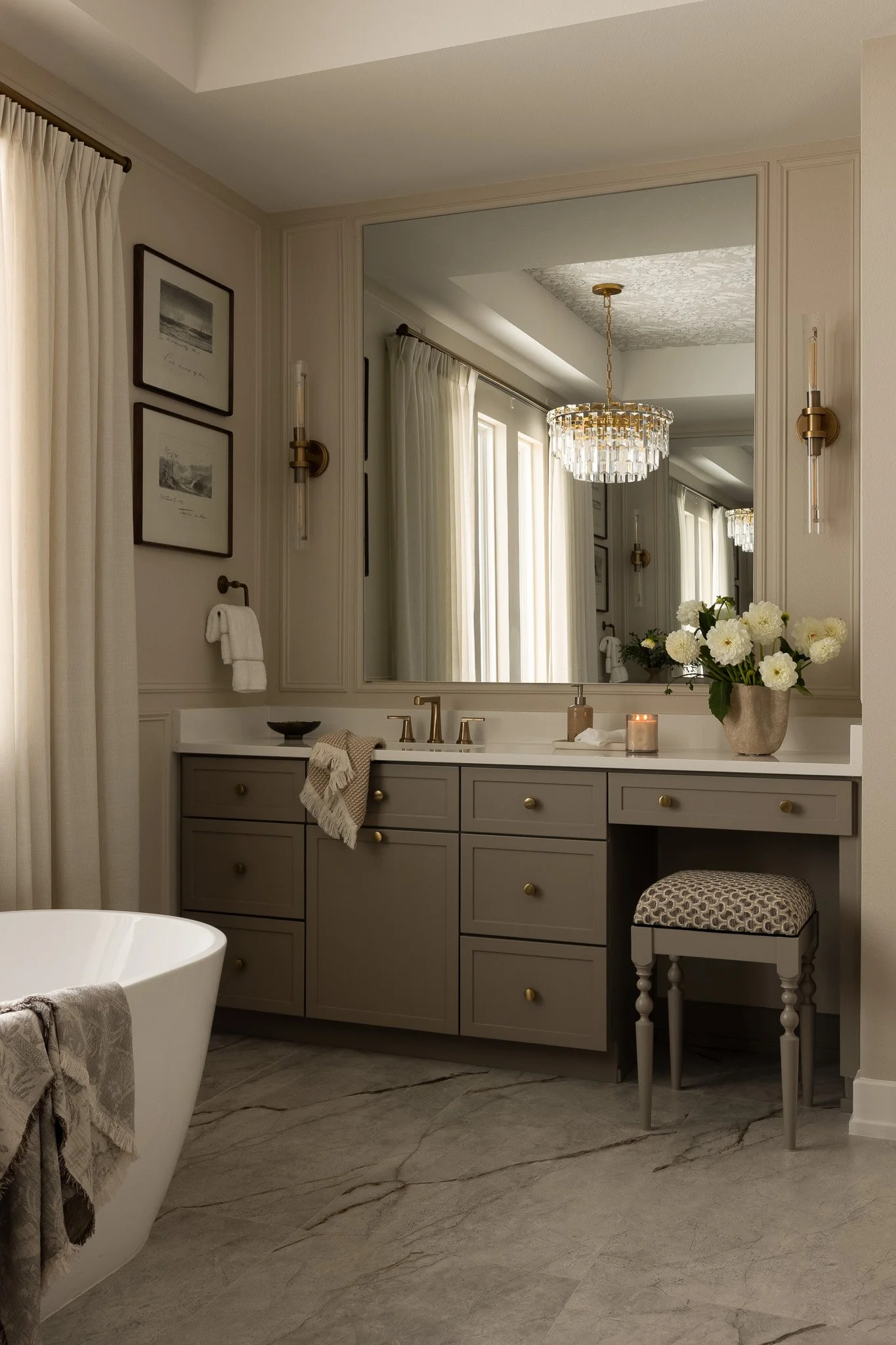
Photography By: Cate Black
The Quiet Details You Might Miss
The ceiling was another opportunity.
At one point we considered something much bolder around the bathtub, but it didn’t feel quite right for these clients. Instead, we used wallpaper on the ceiling.
It’s subtle. You don’t necessarily notice it the second you enter the room.
And that’s precisely why it works.
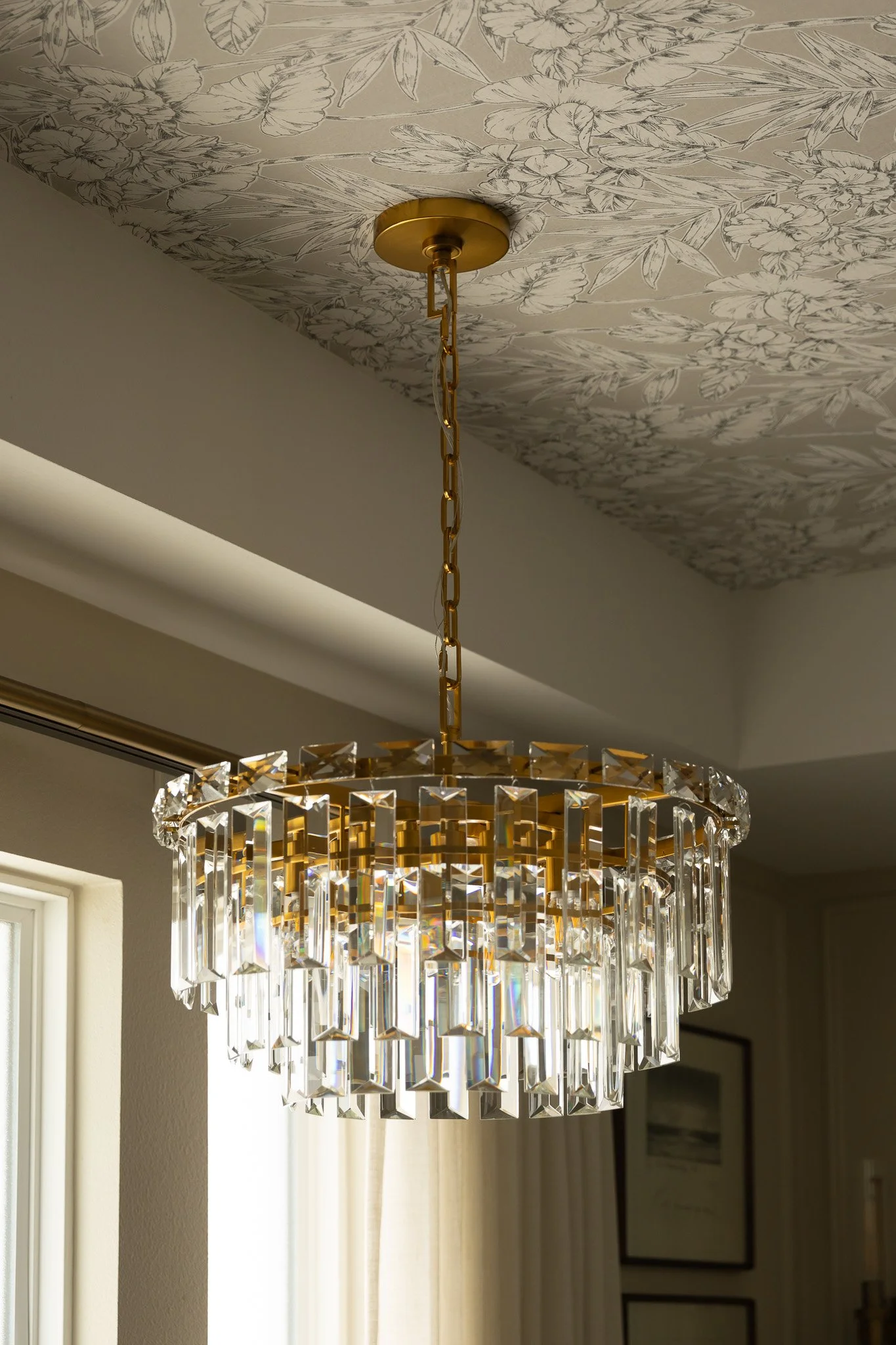
Photography By: Cate Black
Not every design decision needs to announce itself. Sometimes a room becomes more interesting because there are details waiting to be discovered.
Vintage-inspired seascape artwork, warm brass, tailored drapery and the softly patterned ceiling give this primary bathroom layers without disturbing its sense of calm.
The Design Idea That Had to Wait
The bathroom wasn’t the only reason we returned to Poetic Grace.
During the original project, I had looked at the home’s beautiful curved staircase and imagined a sweeping landscape mural following the wall.
My clients weren’t convinced.
At the time, it felt like too much, so we left it alone.
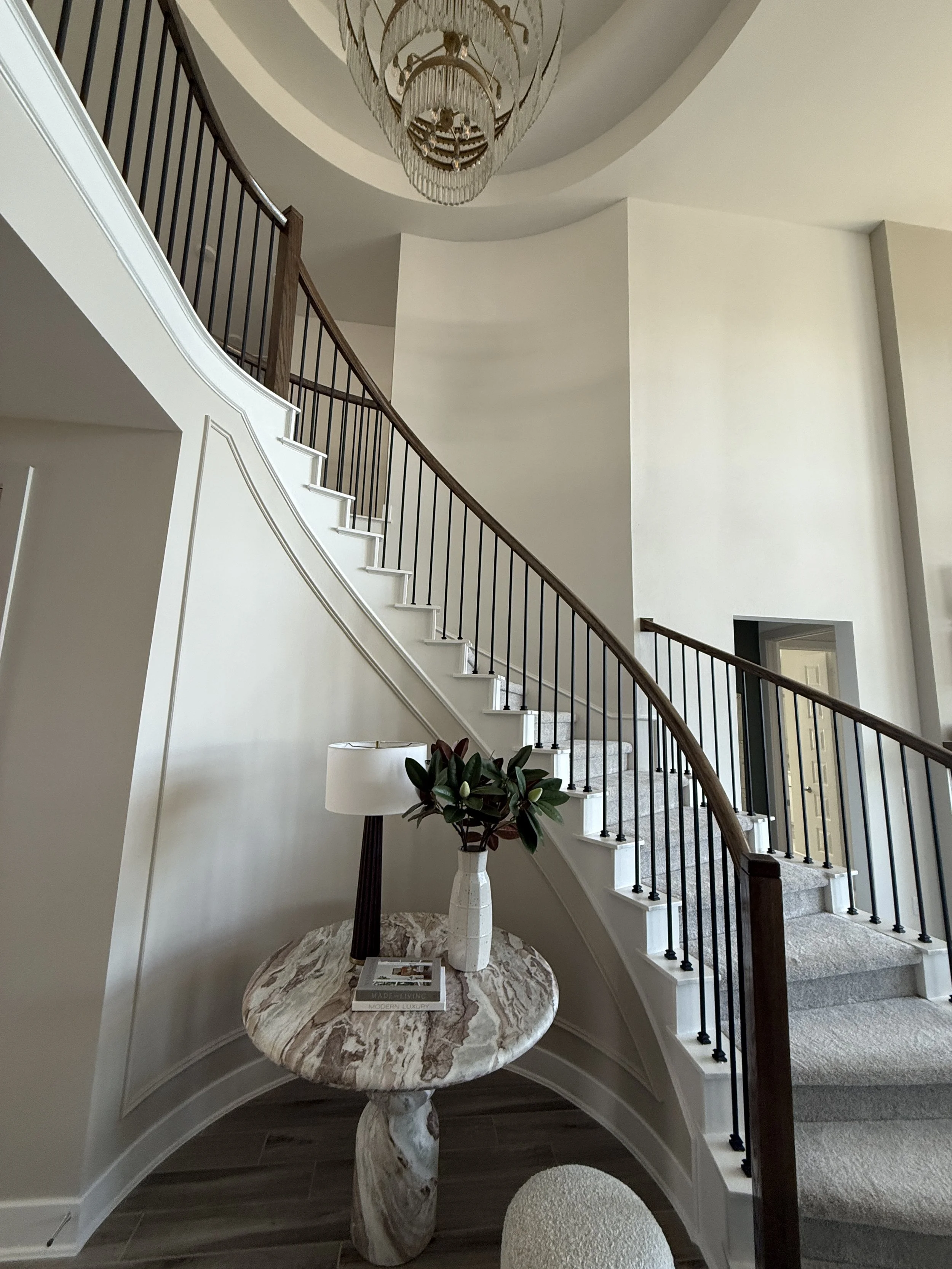
A year later, they looked at that same wall differently.
This time, they were ready.
We paired a dreamy landscape mural with a patterned stair carpet, turning what had once been a quiet pass-through space into one of the home’s most memorable architectural moments.
I love that they waited.
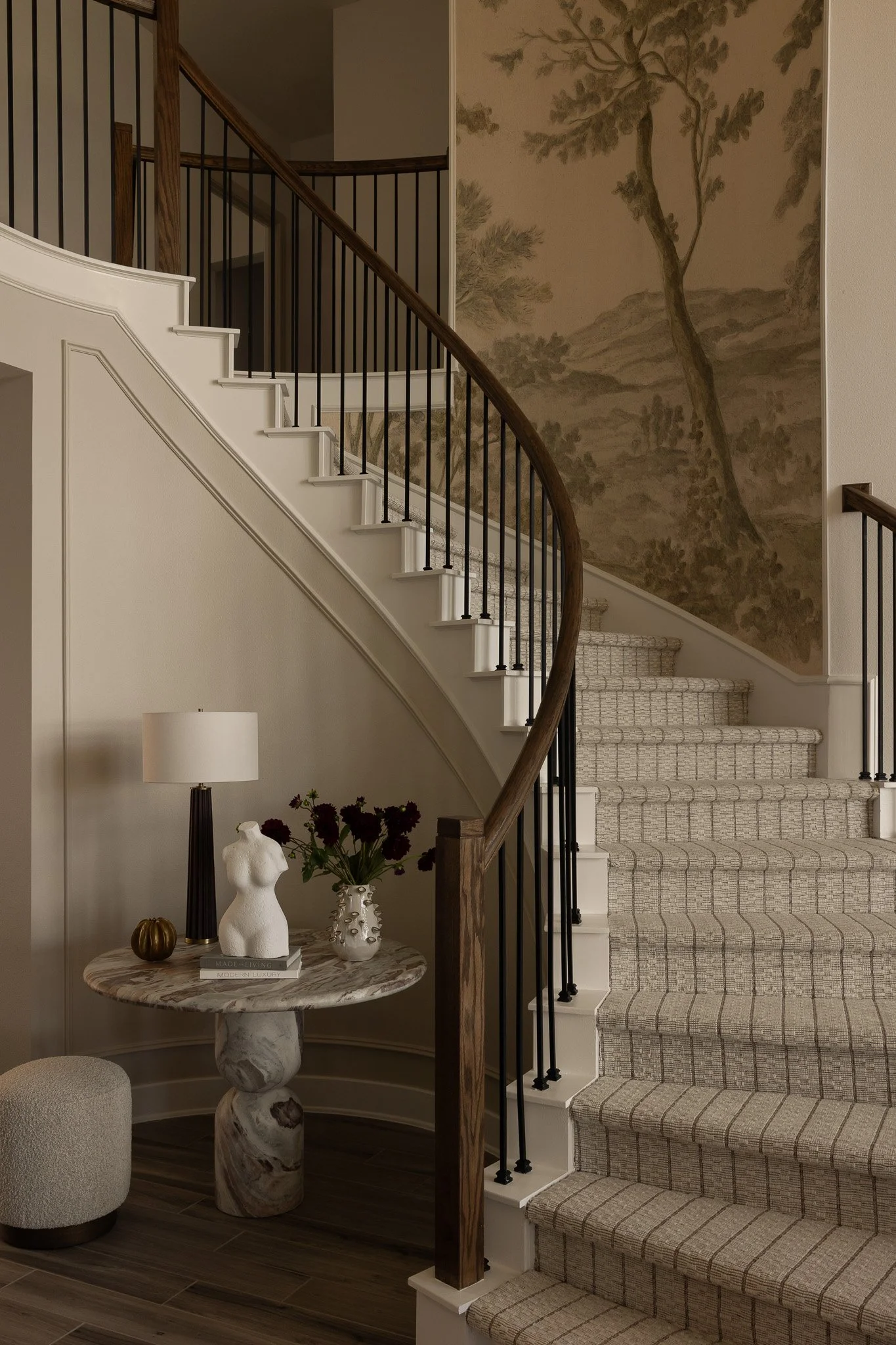
Photography By: Cate Black
Designers have ideas. Clients have instincts. And good design requires respecting both.
My job isn’t to convince someone to do something simply because I think it would look beautiful. It’s to understand when an idea is right for the house and right for the people living there.
Sometimes those two things don’t happen at exactly the same time.
View Poetic Grace | The Next Chapter
Why We Sometimes Design a Home in Phases
There are plenty of reasons to approach an interior design or renovation project in phases.
Budget is certainly one of them. A thoughtful renovation and well-made furnishings are investments, and trying to tackle everything simultaneously isn’t always necessary — or wise.
But there is another benefit to letting a home evolve.
You learn it.
You discover which rooms you actually use. You realize which quirks bother you and which ones you grow to love. You collect art. Your routines change. You become braver about color or pattern. An idea you dismissed suddenly makes sense.
A home begins to tell you what it needs.
That doesn’t mean designing without a plan. Quite the opposite. When we work in phases, I still want to understand the larger picture so that Chapter Two feels like it belongs with Chapter One.
The goal isn’t for everything to match.
The goal is for everything to feel connected.
Poetic Grace, Continued…
When I look at this project now, I don’t see two separate interior design projects.
I see one home that has continued to evolve with the people living in it.
The primary bath feels as though it always belonged there. The staircase has finally become the architectural moment I imagined the first time I saw it. And the original rooms still feel relevant because we weren’t designing around a trend in the first place.
There may even be another chapter someday.
And I think that’s one of the nicest things a home can be:
not finished, but becoming.
Planning the Next Chapter of Your Home?
Claudia Pakes Design Studio provides full-service interior design, furnishings and renovation design throughout Austin, Lakeway, Bee Cave and the surrounding Texas Hill Country.
Whether your home needs to be reimagined all at once or thoughtfully completed in phases, we begin with the same question: How do you want your home to feel — and how does it need to work for the way you actually live?

Before & After: Interior Design in Westlake Austin (Lost Creek Home)
Before and after interior design project in Lost Creek, Westlake Austin. See how we transformed a family home into a cohesive, elevated, and livable space.
A Westlake Family Home Designed for Real Life
Located in the Lost Creek neighborhood of Westlake Austin, the Vista Verde project began with a home that already had character—but lacked a sense of cohesion and personality.
Our clients, a young family with two daughters, had recently moved into a larger home with the intention of settling in long-term. While the house had been updated by previous owners, it didn’t yet feel like theirs.
They wanted a home that could do both:
feel relaxed and functional for everyday family life
feel elevated and ready for entertaining
That balance became the foundation of the entire design.
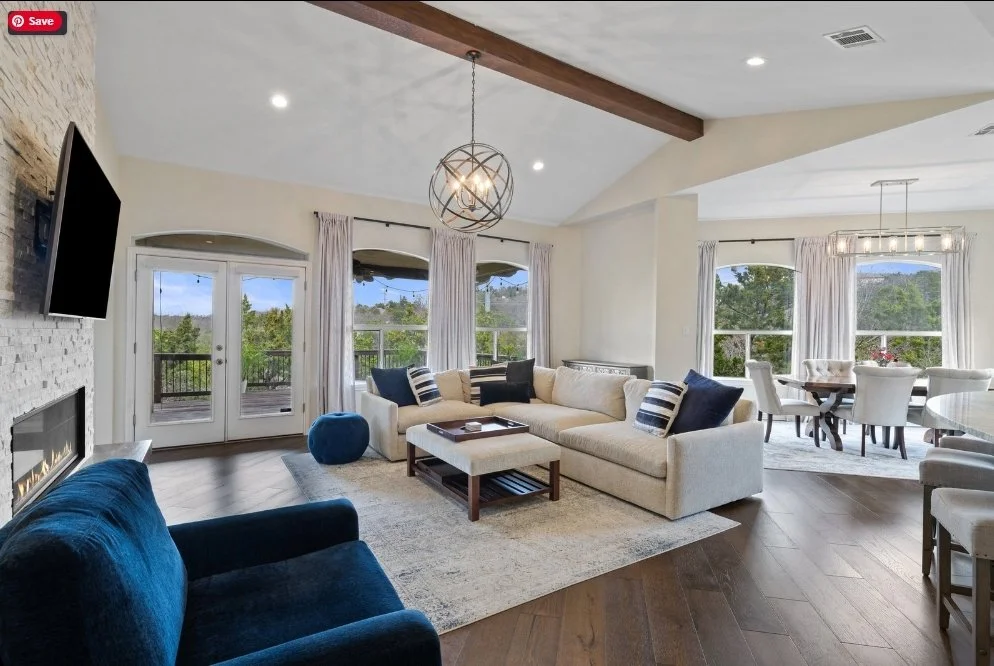
“BEFORE” IMAGE OF OUR VISTA VERDE PROJECT - WESTLAKE AUSTIN, TX.
The Challenge: A Home That Felt “Almost There”
Like many homes in Westlake and Lost Creek, this one had great bones—but the details didn’t fully connect.
The space felt:
slightly unfinished
lacking warmth and layering
not fully aligned with the family’s lifestyle
Although updates had already been made, the home needed a more intentional approach—one that would refine what was there and elevate it into something cohesive and personal. View more details of the “before” conditions of this project HERE.
The Vision: Casual, Elevated, and Designed for Living
From the beginning, the goal was clear:
Create a home that feels:
modern but not cold
refined but still comfortable
family-friendly without sacrificing style
We leaned into a modern organic direction, layering:
warm textures
natural materials
clean, modern silhouettes
The result is a home that feels grounded, inviting, and distinctly personal—never overly styled or rigid.

“AFTER” IMAGE OF OUR VISTA VERDE PROJECT IN WESTLAKE, AUSTIN TX.
Creating Zones for How the Family Lives
One of the most important shifts in this project was creating intentional zones throughout the home.
Instead of designing one continuous space, we focused on how the family actually lives day-to-day.
We introduced:
a dedicated kids’ retreat for play and creativity separate from the main living areas
refined main living areas for entertaining
layered spaces that could transition easily between casual and elevated
This allowed the home to function effortlessly—whether it was a quiet evening at home or hosting friends.
The Design Approach: Refining, Not Rebuilding
Rather than starting from scratch, this project was about taking what existed and elevating it thoughtfully.
Key updates included:
Custom millwork and built-ins to add architectural interest
Accent paint and wallpaper to bring depth and personality
Updated lighting throughout the home
New hardware and finishes for a more cohesive look
One of the most impactful changes was enhancing the home’s connection to natural light, including architectural elements that opened up the living areas and made the space feel brighter and more expansive. The updated black metal windows and doors in the great room truly transformed this space!
Furnishings That Feel Collected, Not Overdone
Once the foundation was in place, we layered in furnishings and styling that brought the home to life.
We focused on:
comfortable, livable upholstery
a mix of modern and organic pieces
subtle contrast through materials and tone
pieces that feel curated rather than matched
Every element was selected to support both function and aesthetic—nothing felt excessive, but everything felt intentional.

The Result: A Home That Finally Feels Complete
The transformation of this home wasn’t about dramatic structural changes—it was about clarity, cohesion, and thoughtful layering.
Now, the home feels:
light-filled and welcoming
functional for everyday life
elevated enough for entertaining
deeply personal to the family living in it
It’s a space where children can grow, parents can unwind, and guests feel instantly at ease.

Great room design of our Lost Creek project in Westlake, Austin TX.
Why This Matters for Westlake Homeowners
Many homes in Westlake and Lost Creek share a similar story:
They have strong architectural foundations but need refinement to feel complete.
If your home feels:
almost finished, but not quite there
disconnected from your style
difficult to pull together on your own
You’re not alone—and this is exactly where thoughtful interior design makes the biggest difference.
Thinking About Updating Your Home?
Whether you’re furnishing a new home, finishing a remodel, or simply trying to make your space feel more cohesive, having a clear plan changes everything.
A consultation is often the best place to begin—especially if you’re not sure what your next step should be.

Interior Design in Austin, TX: Creating a Home That Feels Effortless and Well-Lived
Designing a home should feel exciting—not overwhelming. But for many homeowners in Austin, the process quickly becomes more complicated than expected.
Between managing selections, coordinating vendors, making layout decisions, and trying to pull everything together cohesively, it’s easy to feel stuck or unsure of where to begin.
This is where working with an interior designer can completely change the experience.
What Interior Design Really Means (Beyond Aesthetics)
Interior design is often misunderstood as simply choosing furniture or making a space look beautiful. In reality, it’s about creating a home that works well for your daily life—functionally, visually, and emotionally.
In Austin, where homes range from Hill Country estates to modern new builds and renovated family homes, thoughtful design means:
Understanding how the space is actually used day to day
Creating layouts that feel intuitive and comfortable
Selecting materials and finishes that hold up over time
Designing with both beauty and livability in mind
A well-designed home doesn’t just look good—it feels easy to live in.
The Austin Lifestyle and How It Shapes Design
Design in Austin has its own rhythm. Homes here are often centered around:
Open-concept living for entertaining
Indoor-outdoor connections
Natural light and layered textures
A balance of relaxed and refined
Rather than chasing trends, most homeowners are looking for spaces that feel calm, grounded, and personal.
That’s why we focus on creating interiors that feel timeless, comfortable, and effortlessly elevated—spaces that support both everyday living and hosting family and friends.
When It Makes Sense to Hire an Interior Designer
Many clients reach out after realizing that managing everything on their own is more time-consuming and stressful than expected.
You might benefit from working with an interior designer if:
You’re furnishing a new home and don’t know where to start
You’re finishing a remodel and want everything to come together cohesively
You’ve made a few purchases already, but something still feels “off”
You don’t have time to manage all the details yourself
You want the home to feel complete—not pieced together
What Full-Service Interior Design Looks Like
For busy homeowners, full-service interior design is often the most efficient and least stressful option.
This typically includes:
Space planning and layout design
Furniture, materials, and finish selections
Sourcing and procurement
Coordination with vendors and trades
Delivery, installation, and final styling
Instead of juggling multiple decisions and timelines, you have a clear plan and a single point of contact guiding the process from start to finish.
Why the Process Matters More Than You Think
One of the biggest differences between a well-designed home and a frustrating experience is having a clear, structured process.
Without it, projects often run into:
delays
mismatched finishes
furniture that doesn’t fit
unnecessary re-spending
With the right guidance, those issues are avoided before they happen.
Creating a Home That Feels Finished

A common challenge we see is homes that feel almost complete—but not quite there.
This usually happens when:
pieces are selected individually instead of as a whole
scale and proportion aren’t fully considered
the final layers (lighting, textiles, styling) are missing
Interior design brings everything together so the home feels cohesive, intentional, and fully resolved.
Final Thoughts
Interior design in Austin is not about creating something overly styled or untouchable. It’s about creating a home that feels natural, functional, and reflective of how you actually live.
When done well, the process should feel clear, guided, and ultimately enjoyable—not overwhelming.
If you’re thinking about updating your home, furnishing a new space, or finishing a remodel, working with a designer can help you move forward with clarity and confidence.
A consultation is often the best place to begin.
If you’re searching for a luxury interior design studio in Austin, TX that delivers refined spaces with minimal stress, we’re here to help.
From concept to completion — we handle it all. Book your free discovery call here, and let’s make your dream space a reality.

Interior Design Services in Austin: Flexible Design Support with a Luxury Touch
Great design doesn’t always require a full-scale commitment — sometimes, it simply requires the right expertise at the right time.
At Claudia Pakes Design Studio, our A-la-carte interior design services in Austin are designed for homeowners who want professional guidance without the scope of a full home project. These services offer flexibility, clarity, and elevated design direction — perfect for busy professionals, growing families, and design-savvy clients who want expert input without overwhelm.
What Makes A-la-Carte Interior Design Different?

A-la-carte interior design allows you to work with a professional designer on specific design needs, rather than an all-inclusive package. You choose the services that matter most to your project — whether that’s refining a layout, selecting finishes, or completing the final details.
You still receive the same thoughtful design process and attention to detail — just tailored to your priorities.
Our A-la-Carte Interior Design Services in Austin:
Design Consultation
Our design consultation is often the starting point. This session provides professional insight into your space, layout recommendations, aesthetic direction, and next steps. It’s ideal for clients who want clarity before moving forward or need guidance to make confident decisions.
Space Planning & Furniture Layout
A well-planned layout is the foundation of a functional home. We help define furniture placement, traffic flow, and spatial balance to ensure your home feels intentional, comfortable, and visually cohesive.
Color, Finish & Material Selection
Selecting paint colors, flooring, tile, countertops, and finishes can quickly become overwhelming. We curate cohesive palettes that reflect your style while ensuring everything works together seamlessly — now and long-term.
Furniture & Decor Selection
From key furniture pieces to decorative accents, we help source items that elevate your space while supporting everyday living. Each recommendation is chosen with scale, comfort, and longevity in mind.
Lighting Design Guidance
Lighting has the power to transform how a space feels. We provide guidance on fixture styles, placement, and layered lighting strategies that enhance both function and ambiance throughout your home.
Kitchen & Bathroom Design Support
For clients working with contractors or builders, this service provides professional design direction for kitchens and bathrooms. We assist with layout refinement, cabinetry style, finish selections, hardware, and overall cohesion — helping you avoid costly mistakes.
Custom Window Treatments
Window treatments are a critical design element that often gets overlooked. We guide you through fabric selection, styles, functionality, and hardware options to ensure your window treatments feel tailored and fully integrated into your design.
Finishing Touches & Styling
The final details make all the difference. This service focuses on art placement, accessories, textiles, and styling elements that bring warmth, balance, and polish to your home — perfect for spaces that feel almost complete.

Virtual Interior Design
For added flexibility, our virtual interior design services allow you to receive expert guidance remotely. You’ll receive clear design direction, curated selections, and actionable plans — ideal for clients with busy schedules or homes outside the Austin area.
Who Benefits Most from A-la-Carte Interior Design?
Homeowners updating specific rooms
Busy professionals managing projects independently
Clients working with contractors or builders
Design-savvy homeowners seeking expert validation
Those who want luxury design guidance without full-service scope
A Thoughtful, Stress-Free Design Experience
Our A-la-carte interior design services are built on the same philosophy as our full-service work: thoughtful design, seamless guidance, and a stress-free experience. We help you make confident decisions, avoid costly errors, and achieve a cohesive look — without unnecessary complexity.
Design Support, On Your Terms
With A-la-carte interior design services in Austin, you don’t have to choose between professional expertise and flexibility. You can have both.
Whether you’re refining one space or finalizing the details of your home, we’re here to guide you every step of the way.
Ready to Begin?
If you’re looking for flexible, high-end interior design services in Austin, our A-la-carte options are an ideal place to start.

A-la-Carte Interior Design Services in Austin: Expert Design, Your Way

Not every home needs a full renovation — sometimes, you just need expert guidance at the right moment.
At Claudia Pakes Design Studio, our A-la-carte interior design services in Austin are created for homeowners and busy professionals who want high-end design support without committing to a full-scale project. Whether you're refreshing one room, selecting finishes, or need professional direction before making decisions, our flexible services deliver clarity, confidence, and elevated results.
What Are A-la-Carte Interior Design Services?
A-la-carte interior design allows you to select only the services you need, when you need them. It’s ideal for clients who value professional expertise but prefer a more hands-on or phased approach.
You receive the same thoughtful design, attention to detail, and refined aesthetic — just tailored to a specific scope.
Our A-la-Carte Interior Design Services in Austin
Space Planning & Layout Design
Perfect for new homes, remodels, or tricky layouts. We help you optimize flow, functionality, and furniture placement so every square foot works beautifully.
Color & Material Selection
Choosing paint colors, tiles, countertops, or flooring can feel overwhelming. We curate cohesive palettes that align with your home’s architecture and your lifestyle.
Furniture & Decor Selection
From statement pieces to finishing touches, we guide you toward furniture and decor that elevate your space while staying practical for everyday living.
Lighting Design Guidance
Lighting can completely transform a room. We help you select fixtures, layering strategies, and placements that enhance mood and functionality.

Kitchen & Bathroom Design Support
Ideal for clients working with contractors but needing professional design direction — cabinetry layouts, finishes, hardware, and styling guidance included.
Custom Window Treatments

Window treatments play a key role in how a space looks and feels. We provide expert guidance on fabric selection, styles, hardware, and functionality to ensure your window treatments are tailored, cohesive, and thoughtfully integrated into the overall design.
Finishing Touches & Styling
The final layer is what brings a space together. This service focuses on art placement, accessories, textiles, and styling details that complete the design and give your home a polished, intentional look.
Virtual Interior Design (Austin & Beyond)
For clients who want flexibility, our virtual services provide detailed design plans, shopping lists, and visual guidance — all from the comfort of your home.
Who Are A-la-Carte Services Best For?
Busy professionals managing projects independently
Homeowners updating one room or specific elements
Clients working with builders or contractors
Design-savvy homeowners seeking expert validation
Austin homeowners wanting premium design without full service
Why Choose Our A-la-Carte Interior Design Services in Austin?
Luxury-level expertise without overcommitting
Flexible, stress-free design support
Personalized solutions — no generic templates
Thoughtful design rooted in function and elegance
A seamless experience, even for smaller projects
We bring clarity to your decisions, helping you avoid costly mistakes while achieving a cohesive, elevated look.

A Smarter Way to Design Your Home
Design doesn’t have to be all or nothing. With A-la-carte interior design services in Austin, you get professional guidance exactly where it matters most — making the process easier, faster, and far more enjoyable.
Whether you need help selecting finishes, refining layouts, or completing the final details, we’re here to support you with expertise and ease.
Ready to Get Started?
If you’re looking for flexible, high-end interior design services in Austin, our A-la-carte options are the perfect place to begin.

Maximize Your Space: Clever Room Makeover Solutions for Small Spaces
Small spaces deserve just as much intention as large ones. With thoughtful planning and the right design approach, even the most compact room can feel open, functional, and beautifully balanced.
Designing a small room isn’t about adding more — it’s about making smarter choices that allow every inch to work harder.
Understanding the Small Space Challenge
Small rooms come with unique constraints. Limited square footage, tight layouts, and insufficient storage can easily make a space feel crowded. Without a cohesive plan, clutter becomes visible quickly, and functionality is compromised.
The solution lies in intentional design — layouts that prioritize flow, furniture that serves multiple purposes, and finishes that visually expand the space.
Light Colors and Reflective Surfaces
A light, neutral color palette instantly makes a room feel more expansive. Soft whites, warm beiges, and subtle greys reflect natural light and create a calm, airy foundation. Personality can be layered in through art, textiles, and curated accessories without overwhelming the space.
Mirrors are especially effective in small rooms. When placed strategically, they reflect light, add depth, and visually double the size of the space. A large mirror opposite a window or mirrored closet panels can dramatically enhance openness.
Multi-Functional Furniture That Works Smarter
In a compact room, every piece should earn its place. Multi-functional furniture is essential for maximizing usability without sacrificing aesthetics.
Consider beds with built-in storage, ottomans that double as seating and storage, or coffee tables that convert into work surfaces. Wall-mounted desks, nesting tables, and Murphy beds offer flexibility while keeping the room visually light and uncluttered.
Vertical Storage Solutions
When floor space is limited, vertical space becomes invaluable. Floor-to-ceiling shelving draws the eye upward and increases storage without crowding the room. Floating shelves, wall-mounted cabinets, and tall storage provide functionality while maintaining an open feel.

In kitchens and workspaces, hanging rails, pegboards, and magnetic strips keep essentials accessible and organized — freeing up drawers and countertops.
Thoughtful Layout and Flow
A well-planned layout can completely transform how a small room feels. Start by identifying the room’s focal point and arrange furniture to enhance, not obstruct, it. Clear pathways are essential for comfort and visual ease.
Leaving slight breathing room between furniture and walls can actually make a space feel larger. Creating defined zones — rather than lining furniture along walls — adds structure and purpose without clutter.
Declutter With Intention
Clutter quickly overwhelms small spaces. A successful room makeover begins with editing what you own and creating dedicated storage for everything that remains.
Smart organization systems, hidden storage, and drawer dividers help maintain order behind the scenes. Adopting a mindful approach to new purchases ensures the space remains calm, functional, and easy to maintain.
Layered Lighting for a Spacious Feel
Lighting plays a critical role in how large a room feels. Layer ambient, task, and accent lighting to eliminate shadows and dark corners. Wall sconces and pendant lights free up surface space while adding visual interest.
Natural light should always be prioritized. Sheer curtains or minimal window treatments allow light to flow freely, enhancing openness and connection to the outdoors.
Adding Personality Without Overcrowding
Small spaces can still reflect personal style — the key is restraint. Choose a few impactful elements rather than many small accessories. A statement artwork, a textured rug, or a sculptural light fixture can anchor the room beautifully.
Conclusion
Designing a small room is about intention, not limitation. With smart layouts, multi-functional furniture, and a carefully curated aesthetic, compact spaces can feel just as refined and comfortable as larger homes.
At Claudia Pakes Design Studio, we believe great design is measured by how a space supports your lifestyle. Whether it’s a full-room transformation or a strategic refresh, our end-to-end interior design approach ensures every space — no matter the size — feels effortless, functional, and beautifully considered.
Let’s create a space that tells your story (beautifully and quietly).
Our full-service design experience takes care of every detail, from concept to install. Book your free discovery call here, and let’s make your dream space a reality.